About
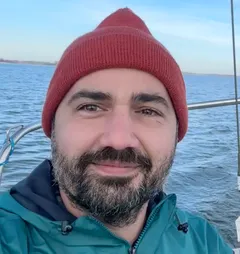
- ecoculture
- The intersection of ecology, economy, and culture — three systems more overlapping in mechanism and phenomenon than scholarship usually recognizes. Ecology and economy share the Greek oikos, the household; culture is what binds the human relationship to both.
I grew up noticing the world's wounds — acutely with people and ecosystems I knew and generally in the histories of places and peoples. Many adults around me insisted that fixing it required suffering and a lot of effort — or that no one could fix it, or that no one knew how. Yet many adults also shared with me their hope and faith in healing. I have spent most of my adult life finding out that the hope was right. Healing the world is not only possible but possible with less effort than what we do now.
Abundance is the default state of the living world. Scarcity is produced — by systems, by histories, by the slow accumulation of choices made by people separated from their own history. The path back is not punishment or grinding labor. It is healing. That is my thesis. I explore this in my writing.
I am an ecoculturist, engineer, photographer, musician, researcher, and writer living in the Appalachian Mountains of western North Carolina at 2,700 feet elevation, where I tend a no-till garden, practice indigenous ecosystem restoration, and study how ecosystems and economies store and transform what they need to survive and thrive. I spent the first 20 years of my life in Mississippi, where I was introduced to histories, plants, gardening, and ecology. I am self-educated in ecology — which means I came to it the way I come to everything: sideways, through obsession, tracking 260+ species across a Baltimore research garden before I ever had language for what I was doing. I study ecosystems holistically, the way the people who lived here before colonial disruption studied them: as communities of relationship, not collections of specimens. I interact with plants the way many people interact with animals — I notice their personalities, we interact, we converse in a language of our own.
I am mixed-race, queer, pansexual, and non-binary. My own indigeneity traces to Lebanon, Britain, Ireland, and French Acadia — its memory long since severed by the co-toxic systems I explore in my writing. I feel an immense connection, respect, and debt of gratitude for the people who took care of my home on Turtle Island for thousands of years before I was born. I read to most people as a white cisgender heterosexual man.
The gap between my identity and my perceived identity has shaped everything about how I move through the world — the access it grants, the trauma it carries, and the particular kind of bridge-work it makes possible. I have spent my career listening for the signals that institutions cannot hear and amplifying them, attempting to redirect credit to its rightful origins, building the conditions for what doesn't surface through normal channels to finally surface. I don't always succeed. But that is the work.
The research behind this publication spans ecology, theology, cultural history, economy, politics, and spirituality — all arriving at the same structural claim from different directions. My Catholic upbringing and largely US audience lead me to work in a primarily Christian theological frame. The Genesis expulsion narrative is a compressed memory of a pre-agricultural food forest-like ecosystem destroyed by the emergence of extractive farming. Agrarian states invented compounding, interest-bearing debt — not human nature. Five co-toxic systems produced extreme scarcity: patriarchy, imperialism, ethno-religious supremacy, colonialism, and extractive capitalism. These are ecological patterns scaled beyond their functional range. The Christian Bible is both a sacred artifact and a fossil record of indigenous ecological knowledge that lost its methodology when it lost its relationship to the land. These are not metaphors. They are arguments, and I intend to make them rigorously.
I practice music — French horn, trumpet, flugelhorn, guitar, banjo, mountain dulcimer, voice, and others. I collect instruments and read across a wide range of disciplines (my book collection is massive and unusually wide in scope). I have been building on Linux and open source since 1996. My professional background is in data and analytics engineering, solutions architecture, and business intelligence, which means I think about systems for a living. The same instinct that makes me trace a data pipeline to find out why it failed makes me trace a word to its Sumerian root, or a cultural pattern to its ecological origin. Everything is a system. Systems can be understood. We can heal any system that produces suffering.
I practice astrology as a timing and interpretive system — not as a belief to defend, but as a mathematical and rhythmic social correlate that I find genuinely useful for understanding pattern and cycle. I practice contemplative traditions across multiple lineages. I am building toward a long-term indigenous ecosystem restoration practice rooted in pre-colonial land stewardship traditions. I have built my life and work on stolen land with stolen ideas. I endeavor to repay those debts.
likesHumidity is named for what I am — someone who thrives in the humid, layered, understory places where the rare things grow. It is where I think out loud, publish original research, and work toward the world I believe is possible: not a utopia imposed from above, but an abundance recovered from below, one plant, one story, one pattern at a time.